
Difficulty Adjusted — May 2026
Issue #1 · Covering April 2026 · Field notes from a hosted Bitcoin mining operation

Why this newsletter exists
There is almost no honest, operator-tier writing for W-2 earners running hosted Bitcoin mining. Most of what’s out there is either profitability calculator content from people who’ve never paid a hosting bill, or marketing-pitch material from the providers themselves. The reader who actually exists — someone with a day job who runs one to six hosted rigs as a tax-advantaged bitcoin accumulation strategy — is mostly being talked past.
That reader is who I’m writing for. I’ve been mining at home and hosting ASICs under an LLC since 2022 — through one halving, multiple hashprice regimes, a full bitcoin drawdown and recovery, and the slow, unglamorous work of figuring out what actually compounds and what just looks like it does on a spreadsheet. The operation runs first, the writing comes from it, and the receipts are real.
If you’re already in this position — or thinking about it — you’re the reader. If you came here looking for trading signals, daily price commentary, or someone to tell you which altcoin is about to moon, you’re going to be disappointed in the most boring possible way.
The format is monthly. The first issue is this one. Everything below is the actual close from April.
Opening
If you’re reading this, you’re already winning. You found bitcoin. You’re past the part where you have to argue with anyone about whether it’s real, and you’re somewhere on the path of figuring out how to accumulate it on your own terms — not on a custodian’s, not on an exchange’s, not on a fund manager’s. This newsletter is for the corner of that path I happen to occupy: a W-2 day job, a small fleet of hosted ASIC rigs, and a tax code that quietly rewards turning electricity into bitcoin if you do the paperwork. Once a month I close my books and write down what the data taught me. April taught me a couple of things worth passing along.
Fleet pulse
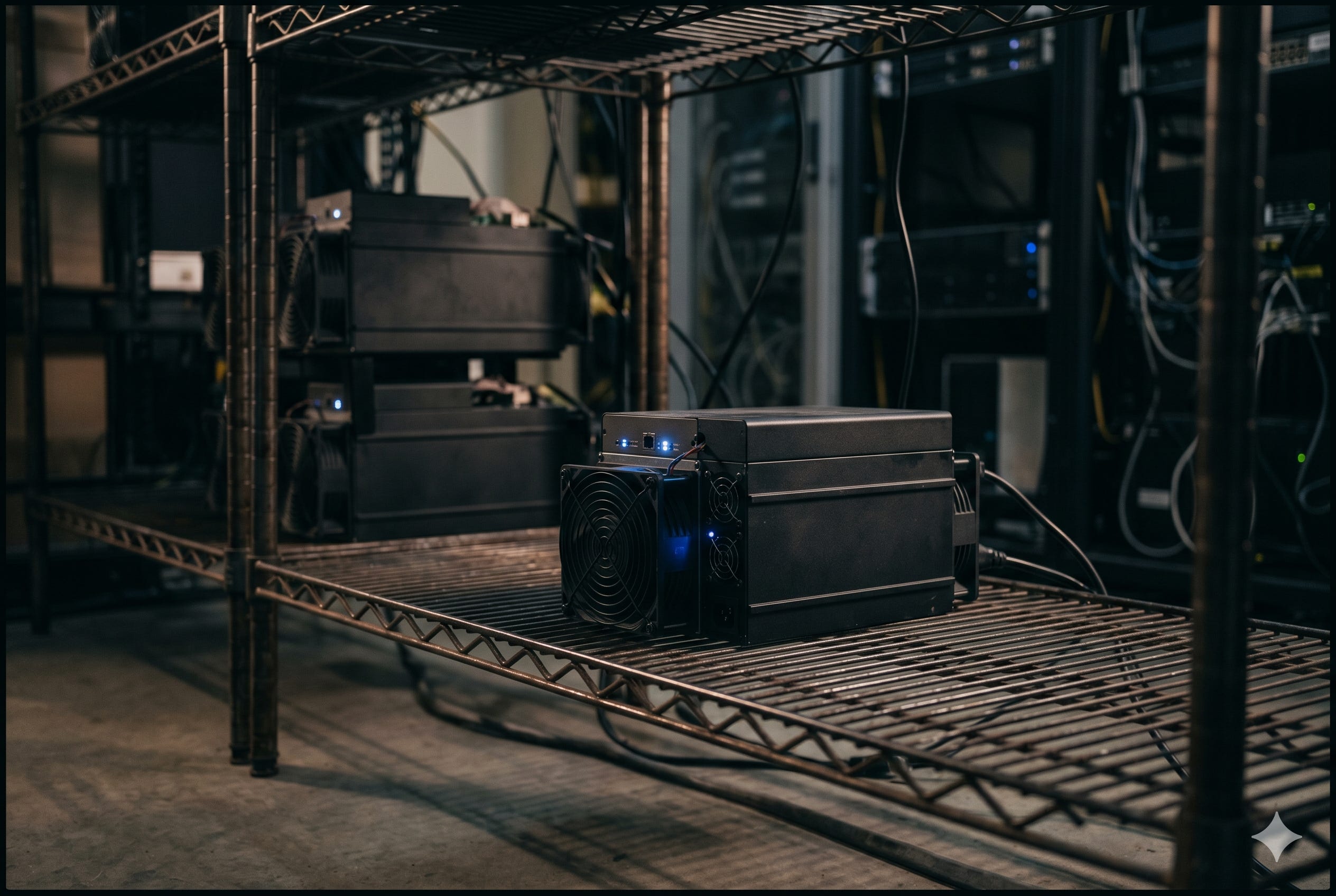
Three S21-class rigs, three hosts, ~667 TH/s combined. April produced 0.00854 bitcoin on $646 of gross revenue — about $21.55/day across the fleet. Hosting came in at $568 across the three sites for the month, putting April net at $78, or about $2.61/day. Thin. Better than the worst months of Q1, worse than the working estimate I’d been carrying — hosting on two of the three rigs ran higher than my run-rate assumption.
The improvement vs. March is almost entirely a price story. Bitcoin averaged ~$73,800 in April vs. ~$67K in March; the rigs themselves did the same work they did the month before. Nothing about the fleet changed. What changed was the spot price of what they produced.
The strategy layer
The most useful thing I did this month had nothing to do with the rigs. It was admitting, in writing, that I’d been measuring the wrong things.
I’ve been running this LLC since 2022 — long enough to have lived through the part of the cycle where every decision feels like the most important one, and long enough to know that the most important decisions are almost never the ones that feel that way. For most of the last year I’d been treating the LLC as one mining business, and the gravity of that framing kept pulling every decision toward “make mining bigger.” At sub-$80K bitcoin, that’s the wrong reflex. Marginal rig economics don’t justify expansion at this price; they justify defense. So I rewrote the operating frame and split it into three layers, each with its own job:
The mining fleet’s job is to keep generating tax-shielded bitcoin DCA at minimum effort. It is not a primary income source and shouldn’t be optimized as one until bitcoin clears $90K and hashprice meaningfully recovers — both, not either. A second rig at current hashprice is maybe $50/month of marginal cash flow. That’s not an expansion; that’s a rounding error with capital risk attached.
The treasury — bitcoin, FBTC, STRC on DRIP — runs in the background. Compounding. Default destination for surplus mining cash flow. No active trading.
And this newsletter, which is the layer that can actually grow. Near-zero capital, near-100% gross margin, an audience that’s small but high-fit. Not because the writing matters more than the mining, but because at current bitcoin prices the mining can’t scale at terms I’d accept and the writing can. I publish monthly because that’s the cadence I can hold for years, and the compounding of useful, honest writing about a niche topic is where this goes.
The Blockware S21 went net-negative for the first time in April — a couple of dollars underwater for the month, with hosting coming in slightly above what the rig produced. That starts the clock on my kill rule: two consecutive net-negative monthly closes and the rig comes off. It’s one month, not two, so nothing happens yet. May close decides it. If May confirms the trend, the rig is retired and I’ll write up the Section 1231 loss treatment piece — the under-discussed tax benefit of retiring a marginal rig — and ship it the same month.
